Monday, October 26, 2009

'Firebird' has landed

A large white tent positioned in front of the Bechtler Museum of Modern Art was my clue. I was heading back from the Starbux at The Square and spotted it. Hmmm. It's right where the Niki de Saint Phalle sculpture The Firebird is supposed to go. Being a snoopy journalist, I concluded it might well be a tent covering the sculpture itself.

I jaywalked across Tryon and noted that the yellow "keep out" plastic tape was down on the sidewalk side, i.e. public right of way, so I walked up and peeked through the openings in the tent. Saw a ga-zillion small mirrors.


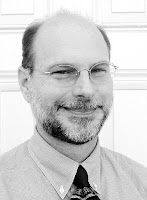
The Firebird landed on Saturday, arriving in two pieces, on a truck. (The photo above was taken Saturday by Observer staff photog Yalonda M. James. The man depicted is Andreas Bechtler, whose art collection the museum will house.) It's now under a tent while it's being worked on by conservator Lech Juretko, who'll be cleaning it, replacing damaged tiles, etc. Official unveiling will be Nov. 3 - Election Day.

The Firebird is mirror mosaics over polyester, on steel innards. The late de saint Phalle (1930-2002) created it in 1991. Bechtler press info says it's 146 inches (12 feet) tall.
I think it is destined to become a Charlotte favorite. As such, it will need a name. Birdie? FB? Sparky?

Commuter rail - westward ho?

Commuter rail to ... I bet you're thinking, " ... to Davidson and North Mecklenburg." A rail line to the north is one of CATS' top priorities, to be built as soon as the feds cough up some money to build it.

In Gaston County, though, they're thinking commuter rail from Charlotte to Gastonia. The Gaston Gazette recently reported on the City of Gastonia's first estimates of what it would cost to build a commuter line on the old Piedmont & Northern railbed, which runs from Charlotte to Mount Holly and on to Gastonia: $265 million to $300 million.

Part of the route's right of way – between Mount Holly and Charlotte – is controlled by CSX and carries freight. The N.C. Rail Division of the N.C. DOT owns the 11.6 miles from Mount Holly to Gastonia, plus a 3-mile spur to Belmont. Here's a link to a map of the P&N line in Gaston County. And here's a link to the NCDOT's page showing the rail rights of way it owns. The P&N was built by tobacco and power company magnate James B. Duke, and carried passengers until 1951.

At the moment, of course, there's no state, federal or local funding for this rail project. And the Charlotte Area Transit System (aka CATS) doesn't have the P&N line as one of its five proposed transit corridors. It's just an idea – but one with support among some key Gaston County leaders, who see a stronger connection to Charlotte as a way to boost economic prospects in a county where unemployment last month was 13.3 percent.

Reminder of terminology: "Commuter rail" typically means a passenger train akin to the inter-city Amtrak service, although some commuter rail uses newer technology, and the cars are usually less comfy. Stations are relatively far apart compared with subway, streetcar, light rail service. But don't call it "heavy rail." That's a term for a system with a powerful electric rail down there with the tracks. It's the "third rail," the kind you should never, ever touch – hence the expression, "Social Security (or any other untouchable policy) is the third rail of American politics." Subways, not commuter trains, tend to be "heavy rail."

Friday, October 23, 2009

Progressive zoning plans - not here

The city of Miami last night adopted a zoning code overhaul, called Miami 21. Here's the Miami Herald article on it. Why should folks around here care? Here's why:

The new zoning overhaul is what's called a "form-based code." Raleigh is about to write one. Cabarrus County already has one. So does Davidson. Miami is the largest city, so far, to adopt one, but Denver is likely to adopt its own comprehensive form-based code in a matter of months, says blogger Mike Lydon. It's an approach to zoning that many progressive cities are taking on. Should Charlotte?

A form-based code bases rules that govern planning and zoning on buildings' form, not their use. In other words, what goes on inside a building (residence? office? store?) is less important than how the building fits in with what's around it.

For instance, it says parking lots have to be behind new buildings, and the buildings have to sit at the sidewalk – which makes walking down the sidewalk more attractive, thus encouraging people to walk instead of drive.

Form-based codes also generally use an approach with a weird-sounding name that makes plenty of sense – a "transect." It means you look at which areas are intensely urban, or completely rural, or somewhere in between and design things such as streets, sidewalks, even storm water management, based on how urban or suburban or rural an area is. It prevents, for instance, plopping a highway designed for intercity travel (think I-277) into a dense urban core. To move traffic there, it would say, use a high-capacity boulevard. (Think Champs-Elysee.)

Just as important, when adopted, a form based code is a plan with teeth. It overlays the city's expectations for urban density or suburban density or rural density onto the whole jurisdiction, complete with the zoning rules that govern those areas. So the "plan" isn't just a guideline but is a legal requirement. Imagine that!

One of the leaders of Miami's effort was the dean of the University of Miami School of Architecture, Elizabeth Plater-Zyberk, a luminary in the New Urbanism movement.

Here's a link to the Web site for the code itself. And if it rains today and you're looking for some meaty reading, here's the pdf for the code itself.

Wednesday, October 21, 2009

Don't waste time seeking hubby in CLT, blog says

Faithful reader "Rebecca" shares a link to The Daily Beast's new city ranking, "Best (and Worst) Cities to Meet Men."

Our beloved Queen City ranked 26 out of 36. At least we beat San Jose.

"After New York City, Charlotte is the country's banking capital, making it the home to a number of young yuppies in training," quoth the Beast. "Though highly educated, the city has a serious shortage of available bachelors. You'd be better off hedging your bets on Wall Street."
The posting quotes the editor of Creative Loafing, Carlton Hargro: "The men say the women are difficult to date in the sense that people don’t go out as much, and the women say that the guys are in a perpetual state of adolescence and they’re just trying to get laid; they’re not interesting in wining and dining.” Maybe they shoulda asked our "Paid To Party" blogger Sarah Aarthun?

Quips Rebecca: "Apparently we are not only dumb but our men are cheap and immature." The Daily Beast, you'll recall, ranked Charlotte at No. 16 among what it deemed the smartest cities.

WashPost on the QC: 'Bust in Boomtown'

The Washington Post's Binyamin Appelbaum – whom you might remember as a business-staff reporter at the Observer until 2007 – weighs in today in the Post with a look at Charlotte: "The Bust Hits the Boomtown that Banks Built."

He writes that the opening of the cultural campus uptown "may be a last hurrah."

An excerpt:

"Few American cities prospered more over the past two decades than Charlotte, its growth propelled and gilded by Wachovia and its crosstown rival, Bank of America. Executives shoehorned gaudy mansions into old neighborhoods around downtown. Workers poured into vast subdivisions on the city's ever-expanding periphery. With coffers overflowing, giddy public officials spent tax dollars on a manmade river for whitewater rafting.

"Now Charlotte is suffering. Unemployment has spiked to 12 percent, well above the national average."

Appelbaum was one of the key investigators in the Observer's lengthy, multi-year look at mortgage fraud, foreclosures and Beazer Homes. Read the "Sold a Nightmare" series here.

Tuesday, October 20, 2009

Where developer money flows (updated)

At last week's East Charlotte candidate forum, one question the neighborhood group asked of all City Council candidates was whether they had received a campaign donation from REBIC, the Real Estate and Building Industry Coalition, a powerful lobby of developers and real estate executives. (Technically the campaign donation is from its PAC known by SPAACE.)

Libertarian Travis Wheat, Democrat Darrin Rankin's wife (who was representing him) and Republicans Matthew Ridenhour and Jaye Rao reported no REBIC donations as of last week. Democrats Patrick Cannon and David Howard and Republicans Edwin Peacock III and Tariq Scott Bokhari all reported receiving a total of $1,000.

Despite the lack of REBIC money, Rankin's campaign spending reports show campaign contributions from uber-developer John Crosland ($1,000), uber-lobbyist Bailey Patrick Jr. ($100), developer Howard Bissell III (son of Howard "Smokey" Bissell).

Incumbent Democrat Susan Burgess bragged last week at the forum that she had never gotten a REBIC donation, which she attributed to her positions on environmental and other issues. But a close look at her campaign reports shows generous developer money flowing her way. Here's a sampling (all are developers unless otherwise noted): Clay Grubb $1,000, David Miller $1,000, Stoney Sellars $1,000, construction magnate Luther Cochrane $750, Smokey Bissell $500, real estate lawyer Collin Brown $500, John Crosland $500, Afshin Ghazi $500, David Haggard $500, Fred Klein $500, Al Levine $500, Daniel Levine $500, Todd Mansfield of Crosland $500, Pat Rodgers of Rodgers Builders $500, real estate lawyer Jeff Brown $400, lawyer Bailey Patrick $200, John Collett $250, Jim Dulin $250, David Furman $250, Peter Pappas $250, "unknown" with Childress Klein gave $250, Ned Curran $150.

Update, 3:55 p.m. Tuesday 10/20: Burgess has added a reply in the comments below. Also, be aware other City Council candidates also get developer money. This is NOT a complete list of any candidate's donors, but just for starters:

- Edwin Peacock III: $1,000 from John Crosland, $450 from Ghazi, and $1,000 each from Al and Daniel Levine.

- Patrick Cannon $1,000 from Crosland, $500 from Clay Grubb, $400 from Stoney Sellars.

- Tariq Bokhari reports $500 from Crosland, and $150 from lawyer Bailey Patrick.

- David Howard: $1,000 from Crosland.

- Andy Dulin (District 6): $500 from Crosland, plus $1,000 each from the Levines.

- Warren Cooksey (District 7): $250 from Crosland, $500 from Joel Randolph (in Sept. 2008).

Read all the donation reports for yourself: Here's a link. Be aware that the final reports aren't due until after the election. And it's sometimes instructive to see who chips in with donations after it's clear who'll be in office. Next campaign finance report due Oct. 26. Then nothing more is due until Jan. 29. It's remarkably handy for keeping the voting public from learning who might have tossed in a big bundle right before election day.

Monday, October 19, 2009

Weirder Charlotte or Starchier Charlotte?

Uh oh. Trouble ahead for Tom Low's "Keep Charlotte Starched" (admittedly tongue-in-cheek) campaign. My colleague Jeff Elder reports from this weekend's Charlotte BarCamp 2 that folks in attendance wanted to start a Make Charlotte Weirder movement. (Of course, Little Shiva beat everyone to this, several years ago, with her WeirdCharlotte.com site)


So, what will it be? Weirder Charlotte? Starched Charlotte? Do we burn the khakis or starch them? Wear jeans instead? Starched jeans?

Which city is starchier - Charlotte or Atlanta? Where does RDU fit in this spectrum? Weirder than Charlotte, more starched than Austin? My two-cents: We should try to shoot the moon (card-playing term, folks, not a NASA attempt) and aim for San Francisco-level weirdness. What with Wells and all.

Wednesday, October 14, 2009

Is landlord "compromise" in jeopardy?

Based on comments at Monday's City Council meeting and at the Tuesday City Council candidate forum in East Charlotte, I count at least five council members who have indicated they support a landlord registry program as originally proposed by the Charlotte-Mecklenburg Police Department: All residential rental property owners would have to register and pay a small fee.

But the Real Estate and Building Industry Coalition lobbied against that proposal, so the City Council committee studying the matter (Democrats Warren Turner and Patsy Kinsey, and Republicans Edwin Peacock and Andy Dulin) ordered a "compromise." The compromise would register only the worst of the landlords - worst being the ones at the top of the list for criminal activity, etc.

However, council members Turner, James Mitchell, Michael Barnes and Nancy Carter all said they support full registry, not partial. Anthony Foxx did not stake himself out Monday but asked a question in order to elicit the answer that full registration would noticeably reduce the registration fee, as it would be spread over a much larger number of landlords.

Kinsey, who is on the committee that coughed out the compromise, pointed out that the compromise was the only way to get the proposal out of committee, as they were stalemated.
Susan Burgess said at the forum Tuesday she supports full registration.

If Kinsey OR Foxx were to vote for full registration rather than partial, that measure would pass.

But, as Burgess said when I asked her Tuesday about it, 6-5 isn't a veto-proof vote. Would the mayor veto it? She said she didn't know.

For those who haven't checked in on this issue, the police want a way to get problem landlords to the table to talk with police about measures to reduce crime on their properties. Police also want a way to be able to find out who the property owners are. They say it can be difficult to find telephone numbers or responsive people with some out-of-town property owners. Neighborhood activists over the years say the same thing - some property owners really don't want to be found.

The question is whether it's worth the hassle of citywide registration to get to the comparatively few landlords causing problems. REBIC and the apartment association don't think it is. The police originally said it was. (The staff needed for the program would be funded with the fees.) When told to "compromise," of course, they dutifully complied.

Key fact: The matter comes before the council in November - after the election. So anything can happen.

Monday, October 12, 2009

Congestion is GOOD?

Provocative piece on Saturday in the Wall Street Journal by New Yorker writer David Owen, author of the new "Green Metropolis: Why Living Smaller, Living Closer, and Driving Less Are the Keys to Sustainability."


Here's his point, in a nutshell: Measures to ease traffic congestion are not good for the environment, because congestion is what makes people decide to opt for mass transit, which is decidedly better than driving.


He's right, of course, although his seeming prescription – just let them sit in traffic if they won't take the subway – seems a bit New York-o-centric. After all, in only a tiny handful of U.S. cities is taking mass transit much of an option. But there's much merit in the idea of figuring out how to funnel more money into transit revenue, through such ideas as bridge access fees (well, not in Charlotte) or congestion pricing scenarios.

A glimpse of progressive transportation

Parents, students walk to Olde Providence Elementary last Wednesday

After my Saturday column about kids and walking to school, I got a meaty e-mail from a reader who lived for many years in Oregon, but who has moved back to North Carolina. She loves it here, but longs for the more progressive planning and transportation options of her former city. She points out:

1. The Safe Routes to School bill passed in 2004 or 5, I think (we moved back to N.C. after 14 years in Lake Oswego, OR, so my memory may be failing me). This bill requires that cities, counties, and school districts all work together to provide safe walking or bike riding routes to school. Many cities/school districts now have route maps; the walking school bus you mentioned is a daily occurrence, and parents who no longer sit in long lines to drop off their children in the car have found that they get to work faster.
2. Every 5th grader in the state now receives bicycle safety training, originally started by the Bicycle Transportation Alliance (of which I was a member). I participated in the “graduation,” and was still surprised to witness children giving their signals correctly, stopping at stop signs…and then turning without looking both ways! The trainer said that at this age, their brains cannot fully detect distance, and training in the 5th grade is the perfect starting point.
3. The Bicycle Bill passed in 1975 and requires that anytime a new roadway is built or reconfigured (not resurfaced), that 3-6 ft bike lanes must be added. It’s the law. Statewide.
[Note from Mary: In Charlotte the developers' lobby stoutly opposes city efforts to require bike lanes on collector streets, because of the "added cost" of bike lanes.]
4. “Cycle Oregon” is a yearly, quite expensive, bike tour covering different routes through Oregon. This ride is effectively changing the minds of the anti-cyclist, especially in rural areas because of the way Cycle Oregon has approached the ride. Simply, for each stopover in whatever small town they arrive, that town gets a pot of $$$$$ (comes out of the entry fee). Now towns vie to be a part of the ride and cyclists find tents, food, music, set up for them by the locals and motorists honking and waving, rather than trying to run them down.
5. Each city in the Portland metro region has a transportation advisory board (of which I was a member/chair for several years); and each city has to strive to meet alternative transportation goals set forth by law from the state, county, and METRO (regional government).
6. The Willamette Pedestrian (yes…I was also a member) Coalition is a nonprofit striving for safer walking access.
7. ACTS Oregon is the Alliance for Community Traffic Safety (of which I was a member representing my city), comprising police, fire, EMT, motorcycle, light rail, bus, truck, bicycle, pedestrian, disabled, “safe routes to school,” train, school, city, county, ODOT. Any group interested in moving people safely is welcome to join. In any given conference, members can participate in activities such as sitting in a big rig to understand where the blind spots are, taking a tour by bike in that town to check out their cycling infrastructure, hearing a talk by Southern Pacific on how to avoid train accidents, attending the awards given to police who go “above the call of duty,” etc. Bringing myriad groups together to discuss safety effectively put an end to bickering about whose safety is more important.

The attitude toward cyclists and pedestrians is not perfect in Oregon - do not think I’m talking alternative transportation utopia! There is still conflict. That said, in Portland alone, over 10,000 people/day cross the bridges (counters have been set up for years) on bike/foot to get in and out of the city, and road expansion has been minimized because they’ve added light rail, trolleys, sidewalks, and bike paths. The suburbs are even connected.

Personally, even though we lived in a suburb of Portland, we were able to live car-free for the 14 years there because I could plop my bike on the bus, ride the first leg (fairly dangerous stretch that now has a light rail line with bike access running alongside it—happened AFTER we left), get off the bus at the Sellwood Bridge and ride the rest of the way (2 miles) alongside the Willamette River on a dedicated bike/ped highway. Daily I passed fathers/mothers on their bikes with their children on bikes or carriers on the way to school/work. Those children were ALWAYS smiling!

Sorry to be so wordy; moving back to NC has been a blessing because both our families live here. I don’t miss the rain in Oregon, but I do miss the power that the public had to ensure that every man, woman, and child had safe access, whether they were in a car, on foot, on a bicycle, or in a boat! We also had to buy a car and I’ve gained 10 pounds since I stopped riding my bike everywhere!

Note: I’ve seen a lot of letters to the editor about light rail, cycling, etc., and have never wanted to respond because I’ll get told “move back to Oregon” by other readers. I don’t want to move back, but I would like to see the Charlotte metro region move into the future!

Keep up the discussion!

Friday, October 09, 2009

Challenges for 2020 Uptown

Let's get down to it. The Center City 2020 Vision Plan launches this month. There will be a public workshop Oct. 21, 5:30 p.m. at the Charlotte Convention Center.

The nonprofit Charlotte Center City Partners, the city and the county held a media event on Sept. 30, including a tour of neighborhoods in and around uptown that will be part of this study. The Observer's April Bethea wrote an article, and on Sunday the editorial board opined, with "New uptown plan to look beyond 'uptown.' "

CCCP, in particular, deserves credit for pushing this idea. Some of my sources tell me it's CCCP – not the city or county – providing the energy behind the 2020 Plan. CCCP President Michael Smith and his senior vice president of planning and development, Cheryl Myers, have a good grasp of the many issues involved.

So here's my two-cents worth on what I hope the 2020 Plan looks at:

• What's wrong with the sidewalk experience uptown? How can it be improved? What needs to change (UMUD standards, for instance) to ensure that we don't keep replicating the errors?
By "sidewalk experience" I don't mean just cracked pavers or crosswalks or utility poles blocking sidewalks on lesser streets. I mean whether it's interesting to walk down the sidewalk. Can you look into store windows? (We know the sad answer to that one, alas.)

Walk down East Trade Street from College to the Transportation Center and you'll see what I mean. Surely we can do better than EpiCentre loading docks and Ritz-Carlton driveways for what should be one of uptown’s premier streets.

Or walk along the "new" Brevard Street between the backside of the Convention Center and the backside of the NASCAR Hall of Fame complex. You'll see that from an urban design standpoint, "backside" is a most polite term. Can I say that the new buildings have created a sidewalk experience that sucks? How did that happen, with the city government's deep involvement in those projects? We do, in fact, employ urban designers. Were they listened to? Whatever happened to requiring street-level retail? This is not a block anyone should be proud of creating.

• Grapple with the pre-existing and outdated zoning categories. They’re what bring us new, suburban-style branch banks right across the street from the urban Metropolitan development in Midtown. They bring us the new, suburban-style Bojangles at Third and Charlottetowne Avenue, and the new, suburban-style Family Dollar at Five Points next to Johnson C. Smith University. It's fine to allow old, nonconforming buildings. But for heaven's sake, if new buildings are going up, can't you ensure that they're not the same old suburbia-in-the-wrong-place?
Two years ago, the city's planners were drowning in rezonings and didn't have time for this. Guess what? Now they do. And they aren't looking at this?
This is where Planning Director Debra Campbell could play an important leadership role.

• Related to the previous: How can the city help create true “centers” for neighborhoods – neighborhood centers where you can easily walk to stores, restaurants and offices? It's hard to explain this concept to people whose only frame of reference is shopping centers and subdivisions, but in older cities different neighborhoods have small "downtown"-like clusters of stores and other businesses. In Boston, the Brighton, Jamaica Plain and North End neighborhoods are good examples. Almost all that's left of what Charlotte used to have are the Plaza-Central and NoDa commercial areas, both compact and walkable.
The city is committed to a "centers and corridors" strategy. But so far it's concentrating on "corridors."
Some of the newer, mixed-use projects (e.g. the Metropolitan) are too much reminiscent of shopping centers rather than neighborhood centers. Part of it is weak project design, part of it is how developers have to put projects together to get financing (including locally owned retail makes it well nigh impossible for developers to get financing), and part of it, I fear, is that the idea of incremental, small-scale buildings owned by different owners has gone the way of the Edsel. Can we bring it back?

• Engage Charlotte-Mecklenburg Schools in this conversation. I mean, really engage. Few things can hurt a neighborhood on the brink faster than being assigned to a low-performing school – or revive one quicker than being reassigned to a popular, high-performing school. Charlotte-Mecklenburg Schools needs to be a full participant in this plan. Yes, school assignment can be nasty and politically radioactive. That's why they call it leadership.

• Why 2020? I want a plan that looks well beyond 10 years. This should be the 2050 Vision Plan. We've had more than enough short-term thinking. The quest for short-term profits at the expense of long-term financial stability is one of the things that drove the global economy into this horrible economic slump. Charlotte's center city planning should rise above that.

(A note of disclosure: Observer publisher Ann Caulkins is a co-chair of the CCCP planning effort. She hasn't told me to write this, or told me what to write. As of this moment she doesn't even know I'm writing this, much less know what I'm saying.)

Thursday, October 08, 2009

Planners DO try to reduce paper

This just in: Planner Tom Drake, hearing about Stephen Overcash's lament about the 26 copies of each rezoning plan, tells me that the city Planning Department now lets you submit only 12 copies plus a CD. But you have to do that each time you submit a new plan for review.

That's only half the paper, which is something, I suppose. ...

Ahem, Charlotte: REDUCE, reuse, recycle?

Got an interesting e-mail from local architect Stephen Overcash of Overcash-Demmitt Architects, responding to my Saturday op-ed on Charlotte and recycling. He points out that there are other ways in which, in his opinion, the city's operations could be far "greener." Take, for instance, the dozens of very large paper plans you have to submit multiple times for every rezoning.

His note:

Hi, Mary:I enjoyed your article last weekend about the City of Charlotte not really being very green and I agree. I am an architect and am appalled at all the waste in the governmental system. There was a discussion over a year ago if the City should hire a Green Guru to help make recommendations, but the Mayor stated that he thought it wouldn't be prudent to incur that expense in the midst of a downturn in the economy. First of all, a good Guru will save the taxpayer his salary many times over in reduced costs. Second, I think with all the professionals that are unemployed, it would be a good time to "get a bargain."

I agree that we need better receptacles for recycling, but out of the three: reduce, reuse and recycle....recycling is a good, but distant third choice. The City of Charlotte should be striving to reduce.....

One example of my frustration: Every time I apply for a rezoning, I am told to submit 26 full-size sheets (sometimes the submittal is 2-3 sheets). Supposedly these are distributed around the various agencies that review them, but we only get comments from about 8 agencies. When I have repeatedly asked the Planning Department (and Debra Campbell directly), I am given some version of an answer that "that's the way it is," "that's the way it's always been done," etc.


When I asked her where the additional 20 sets go, she informed me that many departments, such as DOT, have several reviewers and they all need their own set. Planning is not amenable to a couple of sets to share and a PDF to review on the screen ... or better yet, just an electronic file where I don't have to drive the hard sets down. Once we receive comments, they request another 26 sets, for the second review. Once we are approved, they request a final 15 sets. Where is all this paper going? Why can't the City come into the 20th Century and only request an electronic file that would save storage space, additional files, air conditioning, on and on? (I pray that all the old sets of drawings are at least being recycled behind the scenes, but have been afraid to ask.)

I appreciate your articles trying to keep a little pressure on the Government.

Disgusted in Charlotte,

Stephen Overcash

Wednesday, October 07, 2009

Smart city? Raleigh wins round 1

They may think they're so smart in the Capital City and the Bull City (aka RDU) but the QC has something up its sleeve. More on that below.

First, if you haven't seen this, it's a fun survey from the blog, The Daily Beast. Today even the august Observer editorial board weighed in.
The Daily Beast has ranked a bunch of cities as "America's Smartest Cities" and our Tar Heel colleague up I-85 snagged first place. Raleigh-Durham, says the Beast, "has just about every intangible useful in attracting and developing a smart populace: It’s a university hub, including two of the nation’s elite schools (Duke and the University of North Carolina, Chapel Hill), and those schools led to one of the nation’s great technology incubators (Research Triangle). On top of that, Raleigh, as the state’s capital, attracts engaged political minds, as well." (You may insert favorite joke here about Raleigh politicians.)

Charlotte hit No. 16 – sort of, well, unremarkable. We were deemed less smart than Hartford-New Haven, Baltimore, Milwaukee and Salt Lake City (ouch). But we bested Hotlanta (No. 23) as well as No. 30, Grand Rapids-Kalamazoo-Battle Creek (but where's the sport in that?), and Greensboro and Jacksonville, Fla., tied for No. 37.

Here's what the editorial board had to say. One might say we were bemused, and noted the lack of mention of N.C. State.

But remember that hornets nest? The Queen City is a fighter. So if you are interested in seeing this region become smarter – catch up to Baltimore, anyone? – consider this Oct. 15 event: "A Smarter Charlotte."

A group of people put together by Mark Peres (above, right) of the online magazine Charlotte Viewpoint and Tom Low (right) of Civic by Design will host, "A Smarter Charlotte: Enhancing Our Community Intelligence for the 21st Century." It's 5:30-8:30 p.m. at the just-will-have-opened Harvey B. Gantt Center for African-American Arts + Culture at South Tryon and Stonewall streets. Tickets cost $20, which includes refreshments. For an agenda and to register, click here.

"Good things occur when good people convene in the right way," say the organizers.

Tuesday, October 06, 2009

Recycling, redux

If you didn't see my Saturday column on recycling in Charlotte, take a look here. And in a related matter, in a previous posting, I promised follow-up information on the new recycling bins, and whether we could recycle the old red ones.

Some answers, courtesy of Gerald Gorbey, deputy director of solid waste services for the City of Charlotte.

Can or will the city recycle the old red bins (which are No. 2 plastic)?

Gorbey: The city will not require that red bins be returned. Citizens will be allowed to use them for marshalling bins for their recyclables or for storage use, etc. If citizens prefer to throw their red bin away, the City will collect it and recycle it. The exact process for doing the bin pick-up has not been determined yet. The bin will be recycled either through the county’s material recycling center or through a contractual arrangement with the roll-out cart company that provides the new recycle carts.

What color will the new, rollout recycling bins be:

Green

Any plans to begin recycling of compostables/kitchen scraps?

No plans are underway for providing this service.

And to repeat:

The new rollout recycling will be "single-stream" which means you don't have to sort it, just dump it all into the bin, which will have a lid to keep it dry and, in theory, keep out varmints. However, they are not raccoon- or possum-proof. Yes, I once encountered a possum that had crawled into our gray rollout bin. And another time, a trail of peanut shells led away from the bin, where I had tossed some stale peanuts after a trip to the circus.

As to whether we'll ever see the sort of easy recycling bins uptown that I mentioned in my column, well, who knows? City council member Edwin Peacock told me today that "phone calls have been made."

Thursday, October 01, 2009

Sound off on city's energy policy

A city press release informs us that Charlotte-Mecklenburg residents can submit ideas and suggestions online about how the city should spend $6.7 million, part of a federal Energy Efficiency and Conservation Block Grant.

The grant is to invest in projects to reduce fossil fuel emissions and energy consumption and to create "green jobs" and renewable technologies.

To give your ideas or take the Community Input Survey, visit www.charlottenc.gov and click on City Energy Strategy. The survey ends at midnight Monday (Oct. 5).

Wednesday, September 30, 2009

Can we recycle the recycling bin?

As of next summer the city of Charlotte is changing the way it collects recyclables. The red bins will give way to large rollout containers (an example is shown above) where you'll dump everything and roll it to the curb every other week. This will, in theory, inspire more people to recycle more things. (Clarification: You'll have a recycle rollout bin as well as a regular garbage rollout bin.)


Even if it doesn't, at least now you can roll it out instead of having to haul a bin loaded with newspapers, magazines, cans, glass, etc.

But what should the city do with the red plastic bins? I was talking today with council member Edwin Peacock III, who chairs the council's environment committee, and he said he'd be interested in hearing suggestions.
He noted his own family's red bin had been used for sledding and for washing a dog, as well as recycling. At our place we have three red bins (we read a lot of newspapers), and two are held together with duct tape, having had close encounters with various vehicles.

I vote for recycling the bins. But are they No. 1 or No. 2 plastic?
If not, maybe there's a public art project awaiting, involving a collage of red plastic shards ...

Saturday, September 26, 2009

What doomed the Coffee Cup?

For those who don't always see the Saturday Charlotte Observer, here's a link to my regular weekly op-ed column. Today's topic: what really doomed the Coffee Cup restaurant, the building demolished on Thursday. "It was pricey dirt that killed the Cup."

Friday, September 25, 2009

Charlotte's energy strategy

Tuesday night, the public's invited to a meeting at Charlotte's city-county government center uptown to discuss and share ideas for the city's Energy Efficiency and Conservation Strategy (Energy Strategy). The city got a grant from the U.S. Department of Energy, and if it can develop and submit an energy strategy in 120 days it will be eligible for the first half of more than $6.4 million in grant funding.

The public workshop starts at 6:30 p.m. in the council chambers, then "idea sharing" in the lobby. If you can't make it you can watch it on TV on Channel 16 (if you have Time Warner Cable) or online at http://www.charlottenc.gov/

Here's my 2-cents worth. If you have yours, go tell the folks next Tuesday:

1. Figure some sort of horrific punishment for office building managers who set the A/C too cold during the summer. Maybe chain them to large blocks of ice in January? Force them to pick cucumbers in 95-degree sunlight? Think of all the energy we'd save if indoor summertime temps were normal (75 or so) instead of 68. I went around with a thermometer earlier this summer and noted numerous uptown offices that were icy.

2. Change the tree ordinance to require large maturing shade trees (not teeny crape myrtles or narrow cypress trees) planted in all surface parking lots and located so that they provide shade for the parking places, especially in the afternoon. Hint from a long-time Southerner: If you can park in the shade, your car won't be 150 degrees when you get inside. The tree ordinance already requires trees, but apparently shade hasn't been much of a value, hence the shrubby little things you see.

Wednesday, September 23, 2009

Art comes to Central Ave.


My Twitter buddy @underoak (aka Merry Oaks resident and free-lance journalist and social media expert Andria Krewson) shares this photo of one of the murals going up along Central Avenue, part of the city-funded streetscape project. If you'd like to see sketches from the other artists selected for the series of murals on vinyl, visit the UnderOak blog.

Andria tells me the stencil-like bike wheels at the mural's bottom are the artist's nod to freelance photographer and avid biker Nancy Pierce, who lives in Merry Oaks, and other neighbor bikers.

Tuesday, September 22, 2009

Growing church vs. historic bungalows

It was easily the most interesting of the rezoning cases the City Council heard last night – and the one that brings up the trickiest issue of the evening: What rules, if any, should the city have to limit institutions that encroach into neighborhoods? And how do you deal with big ugly surface parking lots? They're not pedestrian-friendly, nor do they contribute to the much-loved-by-planners "vibrant urban village." They're also polluters, due to polluted storm runoff.

A church in the Wilmore neighborhood wants to expand and build a large new building and a big surface parking lot on a street now holding several historic bungalows. (By "historic," here, I don't mean designated landmarks or in a designated historic district, simply a neighborhood that dates to the turn of the 19th-20th century and has an ambiance akin to Dilworth, Elizabeth and Wesley Heights.) The church has said it won't demolish the five houses but will move them to other property it owns.

The matter was a public hearing on zoning case 2008-158. The council vote should come next month.

Several things made this an interesting presentation. First, the council chamber was virtually filled with members of the church, Greater Galilee Baptist Church, whose current sanctuary (shown above, photo courtesy of the church) is on South Mint Street at West Park Avenue.

Second, one speaker in favor of rezoning had a great line: "We, as people, are in noncompliance. With Jesus."

Yet opponents had some good points: Why should a church be allowed to remove five houses and put up a surface parking lot? As neighbor Chip Cannon put it, this would be putting "a suburban mega-church in the center of a small-scale pedestrian neighborhood."

Some political realities are in order. This church is African American. Two at-large council members are running for mayor and both want African American votes (though black candidate Anthony Foxx has an edge there). Among nine at-large candidates (for four slots), three of the four Democrats are African American. Two at-large incumbents – Democrat Susan Burgess and Republican Edwin Peacock – will have to vote on this petition. Burgess, in particular, will want as many Democratic votes as she can get in November. If she faces black voters' triple-shotting for the three black at-large candidates, she'll have a problem.

Another political reality: No one wants to vote against a church, especially an obviously growing church. Maybe they'd do that in some other city in some other state, but in oh-so-Christian Charlotte? Not on your (eternal) life.

Yet another political reality: How fair would it be to crack down on an African American church when Carolinas Medical Center has been allowed to devour vast tracts of Dilworth with, near as I can tell, hardly a peep of protest from the city? And the affluent and predominantly white Myers Park United Methodist plopped a surface parking lot (nicely landscaped, though) at the prime corner of Providence-Providence-Queens-Queens. No one told them, "No." (Note to out-of-town readers: That intersection is for real. Don't even ask.)

Final political reality: I chanced to be sitting near Planning Director Debra Campbell and asked if there were any zoning standards that said you can't put in a parking lot, and she said, only in the UMUD (uptown) zoning. I asked if planners had considered cracking down on surface parking lots in other zoning categories. She just laughed – heartily, I must add – and said, "No way."

Friday, September 18, 2009

Corbu? Or You?

Yesterday I posed the question of who should be on the list of worst urbanists – spinning off Planetizen.com's entertaining Top 100 Urbanists list.

The easy, cliched choice would be Le Corbusier, the brilliant but destructive architect whose vision for the city of the future was one of tall towers surrounded by large lawns and big highways. In other words, this guy invented Charlotte's suburban office park development Ballantyne, as well as this nation's many failed public housing towers. But Corbu was avant-garde and influential, and many others took up his theories. This was especially true in the U.S., where they dovetailed nicely with the auto and petroleum industries' push to get everyone into automobiles and driving a lot.


But thinking of Le Corbusier made me think of General Motors and its famous Futurama display at the 1939-40 New York Worlds Fair, depicted at right. Surely the automobile and petroleum industries – with their powerful influence on Congress and highway funding and with GM's purchase of many urban streetcar systems in order to dismantle them – did more to shape the nation's cities for the worse than any one architect could.

But then, of course, it's worth remembering that while Le Corbusier did influence huge numbers of architects in this country, Walter Gropius and his colleague Sigfried Giedion (who wrote "Space Time and Architecture") probably influenced more, during Gropius' many years at the Harvard School of Design. So maybe Gropius and Giedion should be on the list.
But again, wait. Architects challenge us to think. They may be wrong but who, really, decides what gets built? It's government that makes the rules that shape our cities. What about Herbert Hoover, who before he became president was Commerce Secretary and commissioned the Standard State Zoning Enabling Act, which to this day underpins most land use ordinances in America and whose very foundation rests upon the theory that separating uses is the way to a safe and healthy city or town. As Jane Jacobs later showed us, it really isn't.

The federal government funded the interstate highway system, envisioned as a way to connect cities. But when it entered the city it caused open, ugly wounds to the urban fabric that continues to damage cities to this day.

It was the federal government whose rules for backing mortgage loans created the redlining that cut off access to credit for anyone who A) was black, or B) lived anywhere near black people, or C) was one of a variety of so-called undesirable ethnics, such as Mexican or Bohemian or D) lived anywhere near any of those so-called undesirable ethnics.

It was the federal government, again through its financing rules, that encouraged the sprawling, low-density suburban subdivision design that vanquished more urban dwelling forms.

Consider: The government is by the people, for the people and of the people. It's all of us. So maybe that worst urban thinker arrow should spin around and start pointing at all of us?

Thursday, September 17, 2009

But who oughtta be 'Worst Urbanist' ?


My colleague Jack Betts, who writes our This Old State blog, read the last post – Who tops 'Top Urbanist' list? – and suggested this, "Be fun sometime to do a list of the Ten Worst urban thinkers… There'd surely be some NC nominees." And he's surely right.

I saw that a commenter on my previous posting nominated Bissell Hayes to top the "sub-urbanism list." Right away, I started thinking about other Charlotteans (Bissell Hayes is a company, not a person, and now it's part of Cottingham-Chalk/Bissell-Hayes) who might be on that "worst urban thinkers" list.

Of course, A.G. Odell leaped to mind. He was a big proponent of uptown, to be sure, but his ideas for "improvement" were derivative of Robert Moses, or maybe Corbusier-esque. One reason downtown Charlotte has so many blocks and sectors that seem dead is that our civic leaders (Hugh McColl among them) kept following Odell's 1966 master plan for uptown development, when they shouldn't have. It tries to impose a single-use pattern, as in "here is your cultural district, there is your government district, here is your entertainment district" and so on. BAD idea.

At first I thought Henry Faison deserved a spot, for Eastland and other suburban shopping malls that wither, long after he's made his money and sold to others. But then, I thought, Faison isn't really an urban thinker, per se. He's just a developer doing what the city zoning and policies allow.

Here are Betts' suggestions:

• Whoever designed the Research Triangle Park – granted, it wasn't urban then but now it's an urban fortress, with concrete moat, in the midst of one the south's largest areas of urban academic sprawl.
• And how about whoever was mayor when the old Charlotte Coliseum was built way out yonder? [The first time that happened the mayor was Victor Shaw, but this being Charlotte he appointed a committee, headed by department store executive David Ovens, to work up a plan for a coliseum-auditorium project built in 1955 way out on Independence Boulevard. And the architect for both the old coliseum and Ovens auditorium? A.G. Odell. And while its location is horrible, and the big ugly parking lots are horrible, I do like the old Coliseum itself, with that great silver dome. And this being Charlotte, we did it again in the 1980s, when Harvey Gantt, an architect and planner was mayor. Built another coliseum way out on Tyvola Road./ mn]

• Or whoever was in charge of letting Raleigh's RBC Center get built in a place that makes visitors stand around in the parking lot after games or performances looking around in puzzlement: where are the bars, the pubs, the cafes, the restaurants, the museums? What were they thinking??????

• Or Tom White when he insisted the N.C. Museum of Art be built in an area where….(see RBC, above….) but at least there was a youth prison (Polk) handily right next door for the arts-and-petty theft crowd.

Who tops "Top Urbanist" list?

The Planetizen.com votes are in and - no surprise - Jane Jacobs has topped the voting of the 100 Top Urban Thinkers. If you don't want to take the time to follow the link to all 100, here are the Top 10:
1. Jane Jacobs
2. Andres Duany
3. Christopher Alexander
4. Frederick Law Olmsted
5. Kevin A. Lynch
6. Daniel Burnham
7. Lewis Mumford
8. Leon Krier
9. William H. Whyte
10. Jan Gehl

Sad to say, Charlotte's Terry Shook dropped off the list during the voting. And am I being persnickety in wondering if there's a whiff of sexism in the No. 2 position for Andres Duany and his partner (and wife, and dean of the U. of Miami School of Architecture) Elizabeth Plater-Zyberk is way down at No. 24? Yes, Andres is the showman of the pair, no doubt. But still ...

Jane Jacobs' topping the list provides me with a chance to tout a new book about the Manhattan activist's battles with Robert Moses (who also made the list, but at No. 23, just below Baron Haussmann, who remade Paris in the 1800s). It's "Wrestling With Moses," by Anthony Flint. It's an excellent and readable account, and since biographies of Jacobs aren't plentiful it helps to fill some blanks in our understanding of her life and work. Here's a link to a long and excellent article about the book in The New Republic from Harvard's Ed Glaeser (who made Planetizen's list at No. 51).

Back to Jacobs being No. 1 - Here's one intriguing thought from Rick Cole, city manager of Ventura, Calif.:

"We're all better off for more attention being drawn to the work of Jane Jacobs -- not just 'Death and Life [of Great American Cities]' but her later work on economics and cities. While I thoroughly enjoyed reading Tony's book, I don't share his view that Jane Jacobs has won the legacy battle. The widespread embrace of her work is often shallow, and developers continue to push megadevelopments that look cute, but are barren monocultures that cannot replicate the 'complexity' she celebrated."

Wednesday, September 09, 2009

City weapon against big box blight advances


A Charlotte City Council committee today unanimously approved a proposed new code for nonresidential (i.e. commercial) buildings. This isn't a building code – those already exist. It's akin to a housing code, only it applies to buildings that aren't housing. I'll add a link soon as the city PR folks send me a pdf version. The draft ordinance isn't posted online.

It'll likely be up for final action on Sept. 28.

The issue is important for neighborhoods where retailers have left buildings behind and the buildings sit, empty, for months. (Take a look at the photo above, of the old Albemarle Road Upton's, built in 1978, photo taken in May.) Sometimes the vacancy occurs because a retail chain goes belly up; other times the company opens a new store, typically on a suburban greenfield site, and leaves the older building. Those vacant and decaying stores have the effect of signalling to other retailers: "Don't move here, retail doom awaits!" And the aura of decay can send a clear signal to other potential investors, too, of an area in decline.

The new code has been in the works since February 2008, when the council told staff to study and develop one. The council's Housing and neighborhood Development Committee has reviewed it three times: April, May and July, and a public hearing was Aug. 24.

To their credit, the city planners have begun pushing developers of new big box stores to agree to language in the rezoning agreement that puts some requirements on the retailer if the store goes vacant: keep up the building, help market it to new tenants, don't put a noncompete clause on the property. But that doesn't give the city any leverage against abandoned commercial properties built without any such requirements.

The city currently requires vacant nonresidential properties to be secure. The new code would extend to occupied buildings, and would require properties to be sanitary and safe, too. It would require property owners to maintain exterior walls, roofs, windows, etc. Broken windows and doors, holes in roofs and walls, garbage on the site and rodent or insect infestations would be potential violations. Near as I can tell, there's very little opposition to it from anywhere, so it should pass easily in a few weeks.

(And an aside, to forestall the inevitable suggestions that abandoned big box stores should be turned into public schools: School architects have studied that suggestion and concluded that state building requirements for schools make renovation of old big box stores more expensive than building from scratch. A charter school on North Tryon went into an abandoned K mart, but charter schools don't have to follow the same building rules as regular public schools. )

Friday, September 04, 2009

Coming Tuesday ...

Much good stuff to write this week, but I was buried with Charlotte City Council endorsement research and writing. I'll dive back into blogging after Labor Day. 'Til then have a good holiday, everyone.

Tuesday, September 01, 2009

Updating U-City transit, street projects

As I'm spending much of today interviewing City Council candidates and editing tomorrow's Viewpoint page, I'll just offer a couple of links to information available elsewhere.


First, here's an overview from University City Partners about the planning for the northeast light rail line. It's a good summation of some of the fine point design issues they're wrestling with, such as how to deal with the North Tryon Street, Harris Boulevard intersection. The next big public meetings on the plans:


• 6-8 p.m. Sept. 29 at Sugaw Creek Presbyterian Church at 101 W Sugar Creek Road

• 6-8 p.m. Sept. 30 at the Oasis Temple, 604 Doug Mayes Place in University Place


Also, thanks again to University City Partners, here's an overview of the planning for overhauling "the weave" – where N.C. 49 (North Tryon and University City Boulevard), U.S. 29 (North Tryon) and I-85 all come together.

Monday, August 31, 2009

No more 'roads' talk, OK?

I found out earlier today that my Saturday oped on "roads" vs "transportation" is getting picked up by Planetizen.com - Maybe that'll make the comments section a bit more, er, balanced.

Other tidbits:

• NYTimes looks at LEED buildings and finds not all of them are all that "green." I've been hearing for some time about dissatisfaction with LEED ratings.

• New blog, "The Avenue" is a collaboration between the Brookings Institution Metropolitan Policy Program and The New Republic magazine. It's about "policies and places in America today" and "will explore what it means to be a metropolitan nation."

• Kiplinger.com declares North Carolina one of the most tax-friendly states for retirees. Check it out.

• My buddy Joe Urban (aka Sam Newberg of Minneapolis) writes about Charlotte and its light rail for Urban Land Magazine. Check it out.

Thursday, August 27, 2009

Who's the anonymous symphony lover?

I'm just back from the noon rally at Trade and Tryon for the Charlotte Symphony, which was fun in a too-much-sun, humid sweat kind of way. Especially since I not only got to hear some professional musicians play, but I got to hear former Gov. Jim Martin play the tuba. Who can't love that?

For the record, he played "Asleep in the Deep" on an instrument he said he borrowed from the Salvation Army. It did indeed have a beat up, well-used look to it. I missed his performance before the official rally started, but he was nice enough to play when I asked him, afterward.

The snoopy journalist in me, of course, required that I ask around about to try to get some clues to the identity of the anonymous donor who just gave the symphony a $500,000 challenge grant. The symphony has until Dec. 31 to raise its matching money, although I was told the challenge grant will be given out in increments, as the matching money is raised.

Meg Whalen, the symphony's public relations director, told me no one at the symphony knows the donor's identity except the CSO executive director, Jonathan Martin, and board chair Pat Rodgers. But, Whalen said, the donor intends to remain anonymous forever. So we're left to speculate about local philanthropists. Leon and Sandra Levine might be atop the list, except they apparently have been busy wiring up a $1 million challenge grant to the United Way of Central Carolinas, announced this morning. And they've already been generous to the symphony, with a $25,000 grant in May.


The symphony has to give its financial turnaround plan to the Arts & Science Council on Sept. 2. If the ASC doesn't like the plan, the symphony gets only a $150,000 in ASC funding, down from $1.9 million last year. If the ASC approves, the symphony gets $900,000.

I'm obviously cheering the symphony on. I'd hate to see Charlotte become one of the largest cities in America without a symphony. Here's a column I wrote on that topic a couple of weeks ago.

Wednesday, August 26, 2009

Kids, cities, diversity and social trust

Update on Thursday, Aug. 27: I have a request from reporter Ann Doss Helms: She's trying to find parents of kids who'd be switched from the Myers Park High School attendance zone to East Mecklenburg. Would the person who left the comment on that effect - or anyone else in that category - please contact her at ahelms@charlotteobserver.com or at 704-358-5033? She wants to hear from people on all sides of the issue.

The comment thread about Best Cities for Kids took an interesting turn last night and this morning. Take a look (link).

Several commenters made the valid point that the U.S. News & World Report rankings appeared to favor relatively affluent, mostly white suburban-ish areas with well-funded schools and low crime. "White flight" someone said, shouldn't be rewarded.

Indeed, I believe a community with many different ethnicities is a lot more interesting, and I agree that the rankings look as if they hadn't taken into account the reality that an affluent suburb is probably going to compare well for schools and crime stats. One commenter said, "Diversity is a city like Charlotte that has a 33% black population, a large Hispanic population, and a large white population. That in itself presents quite a challenge."

Then faithful reader/commenter "Cato" brought up Robert Putnam, a Harvard professor. His recent studies have shown that as ethnic diversity in an area rises, social trust goes down. This is true, he says, for all races and ethnicities. I've heard him lecture on this phenomenon several times, and each time he said he didn't like getting those results and kept double-checking his data and coming up with the same result.

So whoever thinks Cato is misquoting Putnam is off-base.

But I think Cato, too, is off-base in saying, "Why is this [less social trust] a desirable trait in a city? Especially if you get more crime and worse schools in the bargain? Or is it that the intangible benefits of white liberal self-congratulation are enough to coutnerbalance it?"

Putnam thinks it's a good idea to be aware of the tendency toward lower social trust and figure out how to counteract it. To say, "Especially if you get more crime and worse schools in the bargain," seems to me to ignore some realities:

One: Bernie and his hedge fund ilk as well as all the toxic loan purveyors and mortgage fraud perps have proved there's plenty of crime in rich areas too, and it's certainly not "victimless." It's not someone taking your CD player. They're taking your investments, or driving up your taxes by not paying theirs, or destroying the companies in which you own stock. I'd rather have my car stolen than the worth of my 401(k).

Two: Poverty correlates with higher crime, no question. Yet to say that you get "more crime" when a city area is more ethnically and economically integrated might really mean "more crime where I live in what used to be an all white, all middle-class area." The crime is already there, and many low-income people suffer horribly from it.

Three: "Worse schools." Again, the kids with the bad teachers, crappy home lives and falling down schools are already out there, so racial and ethnic and economic mixing doesn't cause those problems, but rather brings them to the attention of people heretofore not having to deal with them.

White flight – or to be more accurate, wealthy and "bright" flight – makes public schools worse, as parents with time, means and enthusiasm to help the schools disappear from the support base. That leaves schools with disproportionately more kids from bad situations, and fewer parents able and willing to fight for better resources. So more of the parents who care about their kids' school then leave, which causes a downward spiral. But it isn't as if racial/ethnic diversity by itself "causes" bad schools, rather the effects of people fleeing the effects of poverty can cause schools to start spiralling downward.

But Cato's right in saying that an economically and ethnically integrated city will indeed have to deal with those problems more than a bedroom community of affluent educated residents.

And for the record, I'm a proud parent of a high school senior who's been at CMS since kindergarten and has top-notch schooling at Charlotte's racially and ethnically diverse public schools. Many CMS schools are excellent, safe and well-run. And yes, some aren't. But just because you see some brown faces doesn't automatically mean the school's a bad place for your child.

Monday, August 24, 2009

Best cities for kids

Now this is a list I wish Charlotte were on:

U.S. News & World Report's list of the 10 best U.S. cities and towns in which to grow up (link here) does not, sadly, include Charlotte. Here are the criteria the magazine said it used:

"First off, you'd probably want a low crime rate. A strong school system would also be key. From there, you'd need lots of other children, expansive green spaces to play in, and plenty of nearby family events. Toss in an abundance of artistic and recreational activities, and all of a sudden you've got one heck of a place to grow up."


Obviously, different people value different things. I might have put a bit more weight on the attributes of a large city, which can offer plenty of things to do without having to drive everywhere. San Jose, Boston and Denver are on the list. Public school problems probably kept New York and Washington off the list (I'm speculating, I don't have inside info). Green space probably hurt Atlanta and Charlotte. Crime probably hurt Charlotte – the city has had, comparatively speaking, a high crime rate for decades.

It's hard to tell if the list is in order of No. 1 to No. 10, but here are the cities, in order:
1. Virginia Beach, Va.
2. Madison, Ala. (a bedroom suburb of Huntsville)
3. San Jose, Calif.
4. Overland Park, Kan. (outside Kansas City, Mo.)
5. Boston
6. Denver
7. Rochester, Minn.
8. Cedar Rapids, Iowa
9. Plano, Texas
10. Edison, N.J.

Thursday, August 20, 2009

They'll choose next CATS chief

Who'll choose next CATS (Charlotte Area Transit System) chief? The four-member selection panel will consist of Charlotte City Manager Curt Walton, County Manager Harry Jones, , Matthews Town Manager Hazen Blodgett and Davidson Mayor John Woods (named by Charlotte Mayor and Metropolitan Transit Commission chair Pat McCrory).

According to a memo from Jones:

"The four members of the selection panel have conferred and agreed to move forward with the recruitment process as follows. Advertisements will be posted electronically with all national transit-related organizations, with a closing date of September 25, 2009. A profile of the Chief Transit Official position, updated during the 2007 recruitment process, will be subjected to a series of focus groups for input. The profile also will be posted on the city/county website for additional public input. The process is designed to name a new CATS CEO by November 30, 2009."

Jones' memo also notes that in 2015 Charlotte will host the national convention of the National Association of Counties. Hmmmm. Whole lotta politicians will be treading our sidewalks. (Lock up the silverware?) But Charlotte hosted the event in 2000 and no mass outbreaks of oratory or political skullduggery were reported.

Charlotte architect one of 'Greatest Urban Thinkers'

The late Jane Jacobs leads the vote so far with at least 660, but Lewis Mumford (270) and Kevin A. Lynch (281) are virtually neck and neck. The horse race? An online contest by the Web site Planetizen.com for Greatest Urban Thinker. Here's a link.

I was cheered to see Charlotte architect Terry Shook (below) on the list, though rather far down it, with 7 votes last I looked. S.C.-based developer Vince Graham is also on the list, with 5 votes.

It's an interesting list and provocative intellectual exercise, because you have to ponder whether some of the anti-urbanists, such as New York's Robert Moses and Le Corbusier, were more influential than urbanists such as Mumford and Jacobs.

The Planetizen gang decided to leave a bit muddy the issue of whether "influential" should mean "brilliant thinker about cities" or "had the biggest impact." Here's what they say:

"What about Le Corbusier, who remains an influential figure in architecture but has been labeled Enemy Number One by urban planners? Like Time Magazine, we've left the definition deliberately vague to encompass those who've had the most influence on the way we think about cities and/or how cities are shaped, for better or for worse. "

I e-mailed Shook (a UNC Charlotte alum) to alert him to his appearance in company of Mumford, Lynch, Daniel Burnham and other Big Names. He replied: " Really? ... Any idea on how I got on there?" (Which I'm pretty sure means he wasn't voting for himself ... )

You can vote for up to 15. Have at it.
One last note: If you're interested in reading about how Jane Jacobs and Robert Moses fought one another in New York over a series of urban redevelopment projects (Jacobs won the battles) look for "Wrestling With Moses," by Anthony Flint of the Lincoln Institute of Land Policy. I've read it; it's well-researched, well-written and quite entertaining.

Wednesday, August 19, 2009

Transit update from the Triangle

Interesting e-mail exchange a few days ago with Brad Schulz, communications officer for Triangle Transit, about what happens next in the places that won permission from the General Assembly to hold votes on adding a sales tax for transit. Schulz was a longtime broadcast journalist in Charlotte, mostly for WBT radio, who left to work for CATS 2000-2003 and joined Triangle Transit in the Research Triangle Park in 2003.

The new law says large counties can put a half-cent sales tax to a vote of the people; smaller ones get the option for a vote on a quarter-cent sales tax. County commissioners would have to decide to put the issue on the county ballot. And I haven't met a politician yet who thinks this year is a good one to take such a question before the voters – especially after the legislature recently popped a 1-cent sales tax increase on us to balance the state budget. But longer term, who knows?

Schulz wrote me, "It’ll be up to commissioners in Wake, Orange and Durham counties to call for a referend(um) (a) when they feel the time is right economically and when each county has a transit plan they feel adequate to answer future needs. ... Triangle Transit is assisting the counties with financial modeling right now on what sales taxes could be raised with a ½ cent and what the counties could provide in ramped-up bus service (much like CATS did) as it planned for light rail.

"The sales taxes would go for bus and rail improvements in the 2015-2025-2030 time frame for construction/completion (remember if you’re going in the federal queue [for funding] it usually takes 10-12 years from plan/design/construct/opening.

"BTW… it doesn’t take all three counties moving in tandem to begin bus and rail improvements. If one or two said yes and the other/others said no, we could still move forward with planning for that county.

But, one caveat is that all of the county plans should also fold into a rational regional transit plan that would one day allow us to connect Chapel Hill with North Raleigh with 51 miles of rail. Light rail is the preferred mode, instead of the diesel units we looked at before, for energy/fossil fuel/environmental-sustainability reasons.

A 29-member citizens commission reported out last spring that the region should be ready to go it alone if there were no federal funds available. The bill as passed ... would allow for 25% state funding – with that precedent set by NCDOT with the CATS Lynx South Corridor Project.

" ... Chances are that the Chambers (of Commerce) would be leading the charge for the ½ cent sales tax along with the business community. BTW… the owners and tenants association of the Research Triangle Park also agreed to raise their taxes in the park to help pay for transit improvements. "

'Kudzu Jesus' - De-Vine?


I was all set to write about the plans for a transit-tax referendum in the Triangle (stay tuned, I'll get to that later today) when, upon researching the News & Observer's stories on transit I found, instead, the story about Raleigh's Kudzu Jesus.

What can I say? It's August. We live in Kudzu Country, the South. Here's a link to the article, and you can check out the photo, by reporter Josh Shaffer, above.

It's a spot where the kudzu has climbed across a wire. Says reporter Shaffer, "From the rear, he looks like Christ the Redeemer, the 100-foot statue overlooking Rio de Janeiro from a pointed mountaintop." It's just off Raleigh's Boylan Avenue bridge.

Random act of nature? A message from on high? Your call.

Friday, August 14, 2009

Let's talk window shopping

The Caldwell Street item sparked some interesting back-and-forth (here's a link) about whether one-way or two-way makes much of a difference for pedestrian comfort.

One commenter points out that the newly reconfigured intersection of Stonewall and Caldwell is so wide that it isn't pedestrian friendly (or bicycle friendly or even motorist friendly) at all. Others say sidewalk width and street-level retail are more important.
Here's my take: They're all important.

If the sidewalk is narrow (one commenter mentions Seventh Street uptown between Seventh Street Station parking deck and Tryon) pedestrians will be turned off.

If there's nothing interesting to look at – that is, if you're walking on a wide sidewalk but you're going past a vacant corporate plaza, a surface parking lot, a parking deck, a blank office wall, or even windows into office buildings – pedestrians will be turned off.

And if the cars are zooming past, as they tend to do on one – way streets when the lights are timed to let you cruise at 35 and hit them all green – then pedestrians will be turned off.

So reverting one-way to two-way is a good first step but if it's the only step it may be a waste of time. I continue to maintain that street-level retail shopping (or as the late jeweler and City Council member Al Rousso used to cry, "Window-shopping! We need window-shopping!") is what's key for uptown, and it's going to be incredibly difficult to achieve because:

• We've spent two decades demolishing storefront buildings until the few that remain are too far from each other to create any retail synergy.

• The city's uptown zoning still allows new development without street-front retail. It requires ground-floor retail, not street-front. Thus we get Founder's Hall and the shops inside office towers. To window-shop requires leaving the sidewalks and streets entirely. Unless you're in an urban scene as dense with stores and lively sidewalks as, say, New York or Paris, that's anti-urban.

Thursday, August 13, 2009

This Monday: Caldwell goes two-way


More back to the future: Several uptown streets are being converted from one-way to two-way.

This is, by and large, a good thing. One-way streets encourage driving fast, which is fine for highways but inside cities is A) More dangerous for pedestrians, B) More dangerous for drivers and C) Makes city streets feel like roads instead of city streets.

Below is a snippet from last week's memo to City Council, saying that Caldwell Street, from Fourth Street to Martin Luther King Jr. Boulevard (formerly Second Street) switches to two-way traffic by noon Monday.

Brevard Street is due for similar treatment, from Stonewall to Trade streets. Update: the section of Brevard from Stonewall to MLK Boulevard will convert in May 2010, and the segment from MLK to Trade will switch in 2011 – some right-of-way issues will delay that segment, says CDOT Chief Danny Pleasant.

Here's the memo:

Beginning Monday, August 17, traffic patterns will change on South Caldwell Street between Fourth Street and Martin Luther King Jr. Boulevard. Starting at 9:00 a.m., crews will begin changing Caldwell Street from a one-way street to a two-way street. The conversion is expected to be complete by noon.
This conversion to two-way traffic is part of the Center City Transportation Plan adopted by the City Council in 2006, and has been implemented as part of the interchange and street modifications associated with the NASCAR Hall of Fame. Later phases will also convert Brevard Street between Stonewall and Trade to two-way traffic. The changes will improve traffic circulation in the area and improve accessibility and safety for pedestrians.

Wednesday, August 12, 2009

Bigger than Charlotte, bigger than Atlanta ...

Megaregions.

If you haven't heard the term before, you'll be hearing it more. I wrote about the idea briefly last March. (Link is here.)

Yesterday and today a group of mayors – including Charlotte's Pat McCrory and Atlanta's Shirley Franklin – plus academics, business executives and others from the Char-Lanta corridor gathered to talk about whether this giant region should start looking at itself as one connected whole, rather than disconnected municipalities and states. Not surprisingly, they agreed to keep talking.

Mega-region is a somewhat new term for the idea that U.S. metro areas are clumped in larger multi-state regions, each operating in many ways as one economic entity, and that addressing environmental, transportation and economic issues requires looking beyond municipal and state boundaries. The so-called Piedmont Atlantic Megaregion stretches from Birmingham to Raleigh (I-20 and I-85 are key connecting threads) and, they say, should be viewed as one large urban region.

Mayors at this meeting were McCrory, Franklin, Jennie Stultz of Gastonia and Robert Reichert of Macon.


Several action items emerged from the meetings (journalists were not allowed in to cover the discussion sessions):

1. The mayors agreed to short-term lobbying to press Washington for money for high-speed rail through the corridor as well as money to replace the Yadkin River bridge on I-85.

2. They'll meet again in October, probably in Greenville-Spartanburg.

3. They'll launch scenario planning to try to glimpse what the megaregion would look like with or without a large-scale regional vision.

4. They'll look to UNC Charlotte, Clemson and Georgia Tech to help develop an organizational structure to keep the group intact.

Look for more coverage from the Observer's Bruce Henderson, but here are a few quick tidbits from a noon press conference today:

- The day's best quote came from Catherine Ross of Georgia Tech's Center for Quality Growth and Regional Development and author of "Megaregions: Planning for Global Competitiveness." Ross was one of the architects of the event. "My grandma said, 'You have to put it on the ground where the chickens can get it.' " In other words, it's a complicated concept and to help people understand it you have to put it out for them so they can start to learn it.

- Mayor Robert Reichert of Macon declared with enthusiasm: "You're catching a glimpse of the future." He noted, however, that "if you think Atlanta and Charlotte are gonna have a lovefest and not compete from now on ... " well, he said, that won't happen. But cooperation and competition can co-exist.

Several times, the mayors said that in their view, mayors are better positioned than governors to work together on such urban issues. In an interview Tuesday, Georgia Tech's Harry West said, "Georgia's governor right now is like a one-armed paper hanger." In other words, busy with multiple priorities.

Interested in learning more? Here are some links:
- Georgia Tech's Center for Quality Growth and Regional Development's megaregions research page.
-Urban Land Magazine's "Think Global, Act Megaregional" (July 2006) by William Hudnut.
- "Think Locally, Act Regionally" from the Brookings Institution.

Monday, August 10, 2009

About that 'new' transit tax ...

You'll remember the taken-out-of-context flap earlier this year about whether the N.C. legislature should add Mecklenburg to a bill that would let all the other N.C. counties ask their voters whether they wanted to levy a small sales tax to support transit.

Plenty of local blowhards both in local news media and elsewhere acted as if the request to be included was the same as actually imposing a higher tax. That, of course, was either deliberate mischaracterization or, to be kinder, incredibly sloppy reporting. The bill lets voters (in other counties) decide whether to tax themselves.


Anyway, it seems the bill (House Bill 148, which does not include Mecklenburg) is about to pass the legislature (it's on tonight's calendar), giving counties in the Triangle (Raleigh-Durham-Chapel Hill) and the Triad (Greensboro, High Point and Winston-Salem) a go-ahead, if they wish, to seek voter approval for a half-cent sales tax for transit systems there. All other counties (except Mecklenburg) can seek voter OK for a quarter-cent sales tax increase.

This is mostly good news, although transit supporters in Mecklenburg had wanted to be included. They wanted to have a tool in the toolkit of transit-funding options so they wouldn't have to expend the time and effort to do what Mecklenburg did in the 1990s: get a special, local bill giving us the authority for a 1998 transit tax referendum. Mecklenburgers still could seek such a special bill from the General Assembly if they wanted to.

The good news is that surrounding counties such as Cabarrus and Iredell are now free to seek local taxing approval if they want to extend the proposed Northeast or North transit corridors beyond Mecklenburg's borders.

Here's a summary from Boyd Cauble, the executive assistant to City Manager Curt Walton, sent to City Council last Friday. (I tried for a link to his memo but couldn't manage it. If anyone can find the thing online, please share the link.)


Intermodal Transit Tax
The House passed a transit funding bill (H148) in April and some questioned whether the bill would be approved by the Senate. Last Wednesday, the Senate voted 37-9 to allow the Triad and the Triangle to have the ½ cent sales tax authority for transit which Mecklenburg currently has. Additionally, H148 allows every other county in N.C., except Mecklenburg, to levy a ¼ cent tax for transit upon voter approval.


The Triangle area did an excellent job of soliciting support from over 100 separate groups and a cross section of bipartisan support in the legislature. Prior to the Senate vote, Senator [Malcolm] Graham and Senator [Charlie] Dannelly [both Mecklenburg Democrats] explored ways to honor the MTC [Metropolitan Transit Commission] and City Council’s request to include Mecklenburg in H148. Unfortunately, adding an additional taxing authority in the bill would have been considered a "material amendment" requiring five additional days for approval. The amendment alternative was abandoned because it would have jeopardized the bill’s passage this session.


Not joining the other 99 counties in getting additional voter authority to fund future transit is very disappointing, but it is comforting to know that now Cabarrus, Iredell, and other adjoining counties have the authority to fund extensions of Mecklenburg’s transit corridors.
Representative [Becky] Carney [Mecklenburg Democrat], H148 primary sponsor, said she has the support of her colleagues to push for Mecklenburg inclusion for additional funding in the future, if local transit supporters and elected officials get behind the movement.